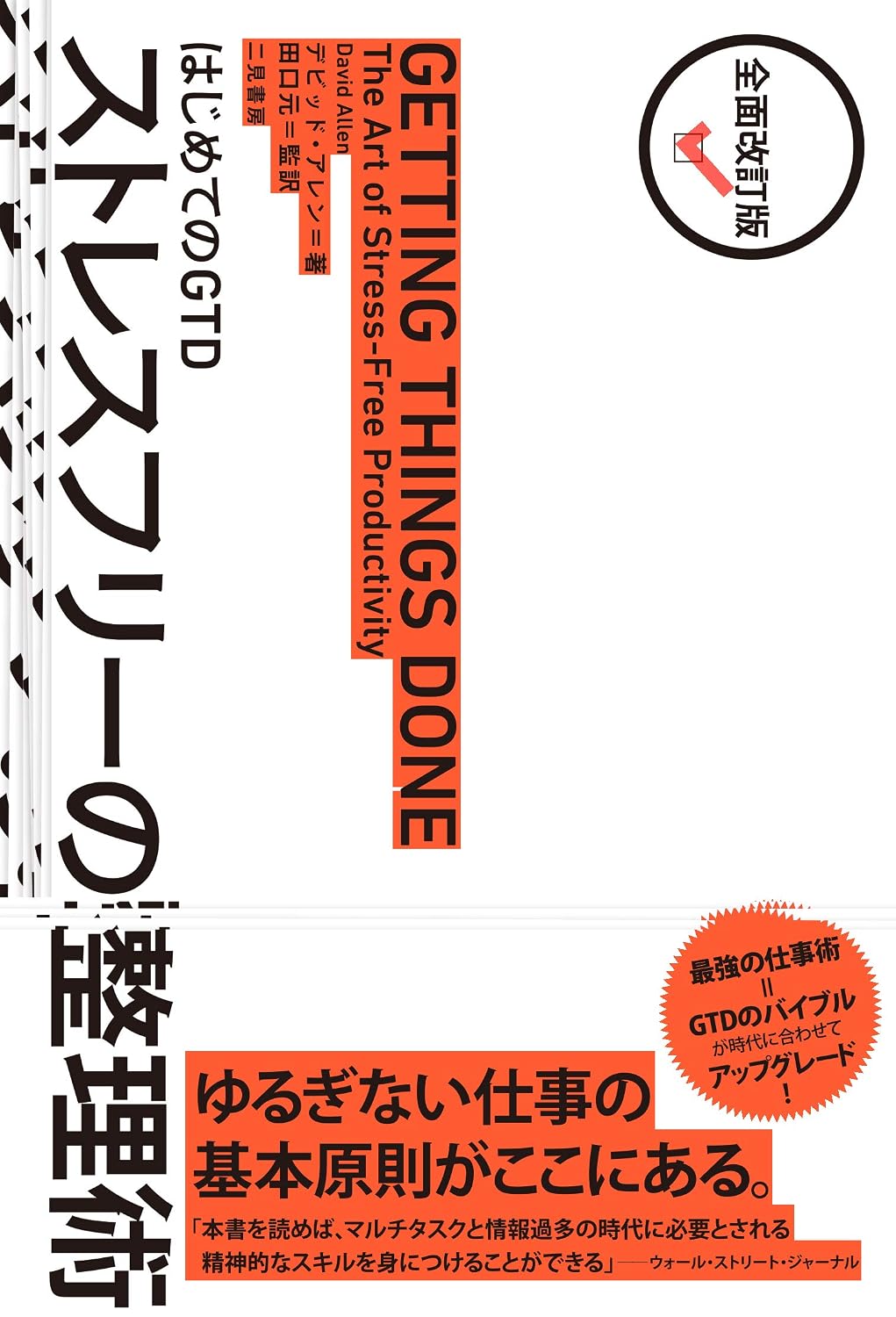
David Allen
Getting Things Done
Revised edition, 2015
About this book
GTD asks you to move open loops out of your head, clarify their meaning and next action, put them in the right lists, and review them regularly. It addresses not information volume itself, but the attention consumed by unprocessed commitments.
What stayed with me
After a friend recommended it, I saw that the system I had built with Scrapbox and Reminders was already close to GTD: capture first, decide where something belongs, express its state with emoji, review weekly, and act according to place and time. It gave an existing practice a name.
The most useful part is treating the mind as something other than a storage device and handing commitments to a trusted external system. I am still working out how GTD's idea of a project applies to my own work; I use it less as a finished method than as a reference frame for programming action.